

2,000+ pages moved to Webflow, with no drop in organic traffic.
Pages migrated to Webflow
Faster page load times
Lower maintenance costs
Drop in organic traffic during the migration

The Problem
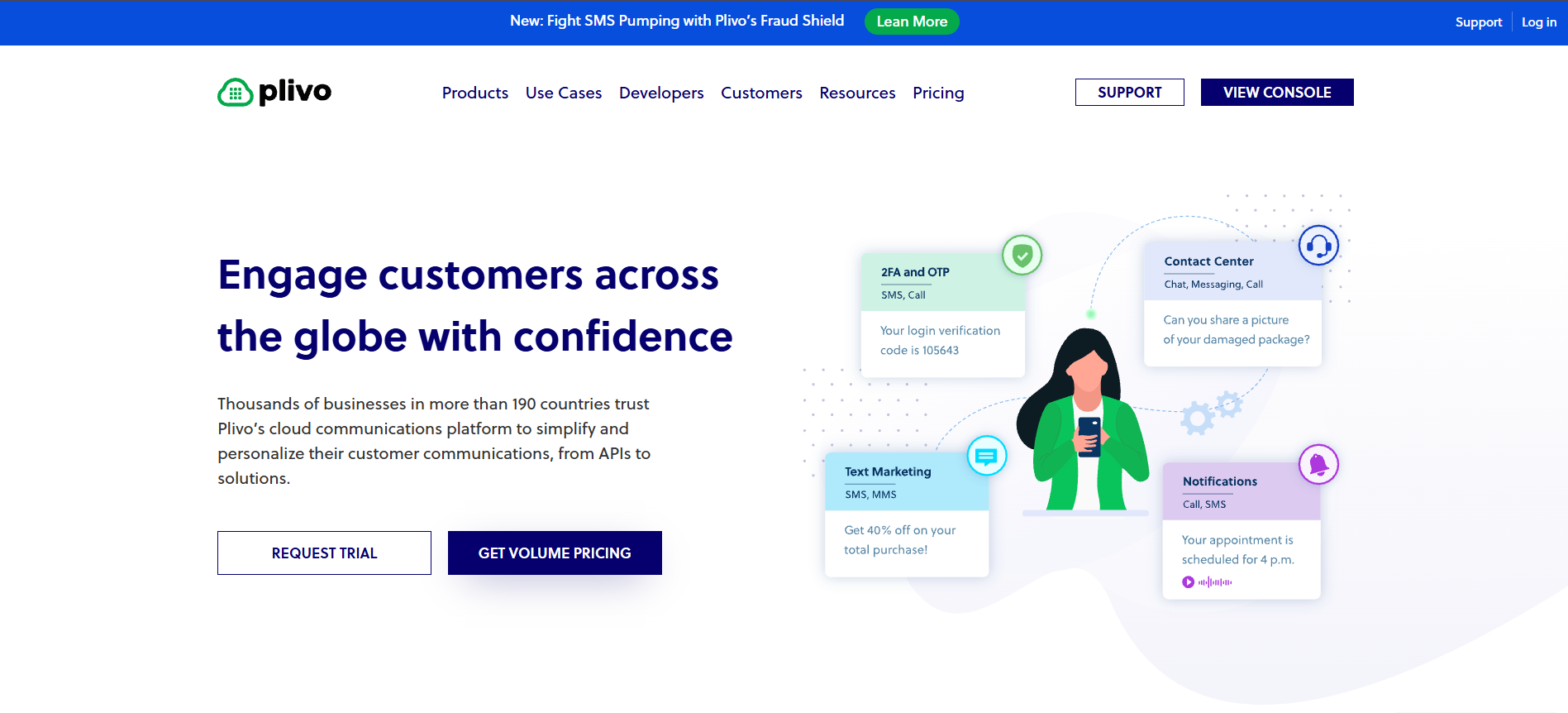
Plivo is a cloud communications platform that gives businesses Voice, SMS and video APIs. Over more than a decade, its website had grown past 2,000 pages: API documentation, dynamic pricing, use cases and marketing content.
All of it sat on a legacy system that was expensive to run and slow to change. Every update needed a developer, so the marketing team could not move at the speed of the business. Plivo wanted the site on Webflow, without paying for the Enterprise plan and without putting its search traffic at risk.
The Challenge
Moving a site of this size is less a redesign than an engineering problem. Five constraints shaped the project.
- Scale: More than 2,000 pages had to move, far beyond what a typical Webflow site holds.
- Plan limits: Plivo wanted to stay on Webflow’s Business plan, which caps a site at 150 static pages and 10,000 CMS items. The Enterprise plan was ruled out on cost.
- Search traffic: Organic search brought in a large share of Plivo’s developers and buyers. Losing rankings during the move was not an option.
- Live data: Pricing, API documentation and use cases depended on data that changes often and could not be copied by hand into static pages.
- Team ownership: The marketing team needed to launch and edit pages on its own, without a developer for every change.
Solution
We planned the migration around Webflow’s limits instead of fighting them, then made sure the Plivo team could run the site on its own.
1. Audit and migration plan
- We audited the legacy site to map every content type, dynamic element and static page.
- Pages that served the same purpose were marked for consolidation.
- The result was a migration blueprint that fit the Business plan from day one.
2. Fitting 2,000+ pages into the Business plan
- Live data through APIs: Pricing, API documentation and FAQs are pulled from Plivo’s internal APIs with custom JavaScript, so they stay current without using CMS items.
- Serverless functions: AWS Lambda handles heavier data requests and generates dynamic page content, keeping the site fast and within the static page limit.
- Fewer, smarter templates: Dozens of near-identical static pages were replaced by a few reusable templates with filtering and search.
- CMS budgeting: Critical content stays in Webflow, while low priority content moved to external services to protect the 10,000-item limit.
3. Protecting search traffic
- Every legacy URL was mapped one to one, with 301 redirects for any path that changed.
- Titles, descriptions and schema are generated by rules, so every page meets the same SEO standard.
- Core Web Vitals were improved as part of the build.
4. Rebuilding the advanced features
- Custom scripts handle the dynamic URL structures a traditional CMS would normally provide.
- Pricing calculators and real-time API status pages were rebuilt in Webflow with custom code.
- Multilingual content runs through Webflow’s CMS and external scripts.
5. Handing over control
- Reusable templates let the marketing team launch campaign and content pages without technical help.
- Training sessions and documentation got the team publishing independently.
- Automated deployment, monitoring and scheduled backups keep the site reliable as it grows.
Results
Plivo’s full website now runs on Webflow’s Business plan, with no drop in search traffic and a marketing team that ships pages on its own.
- A complete migration
- 2,000+ pages moved to Webflow, with every dynamic feature working.
- The site runs on the Business plan, avoiding the cost of Enterprise.
- Search traffic protected
- No drop in organic traffic during the migration.
- Several pages moved up in rankings thanks to faster load times and cleaner metadata.
- A faster site
- Pages load 40% faster than on the legacy system.
- Lower running costs
- Maintenance costs fell by 50% because day-to-day changes no longer need developers.
- A team in control
- Plivo’s marketing team now launches campaigns and updates content without technical help.
Technical highlights
What you can take from this
A large, complex website does not need an Enterprise plan or a risky big bang move. Planned around the platform’s limits, 2,000+ pages can move to Webflow without losing search traffic, and the marketing team ends up owning the site.
More case studies
An AI company that sells to restaurant owners. So we didn’t design it like an AI company.
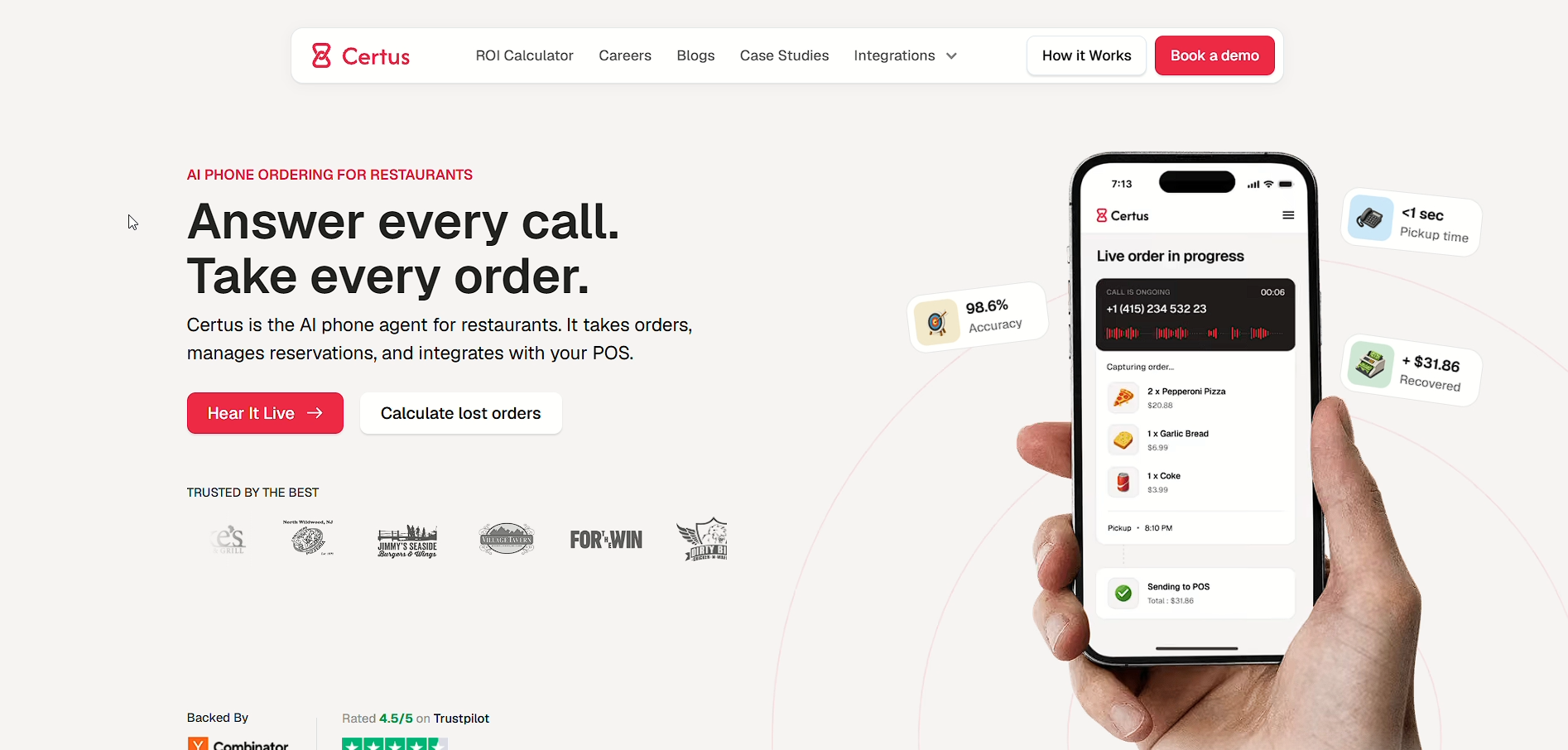
Certus answers restaurant phones with voice AI: orders, reservations and catering, straight into the POS. Their buyer is a restaurant owner between lunch and dinner service, not a CTO. Dark gradients, neural network graphics and AI jargon would have lost them in seconds.
They started with a one-page website and were changing fast: new customers, new integrations and a sharper position every few months. The site had to be ready for pages they did not need yet.
Pages, from a single page to a full website
Inbound demo requests over 12 months
Organic traffic
Custom illustrations in the new design system

Find out what your website is costing you in leads.
In 30 minutes we review your site live with you and point out the three changes most likely to book more demos. You keep the notes, whether you hire us or not.
© 2026 Techginity. All rights reserved.